

Adult learner in conversation with a tutor across a small round table in a London classroom

Course levels and study formats

English levels and study formats explained

Two decisions shape your course: the level you start at, and the format that fits your week. This page covers both, from A1 beginner to C2 advanced, across small groups, one-to-one tutoring, online and at our London classroom.

How CEFR levels work in practice

The CEFR is the scale used across UK universities, employers and exam boards. A1 and A2 cover beginner and elementary: basic introductions, simple transactions, short written messages. B1 is intermediate, where most everyday conversation becomes possible but accuracy and range are still limited. B2 is upper-intermediate, often the threshold employers and universities ask for. C1 and C2 describe advanced users who handle complex, abstract and fast-moving language.

We describe levels by what you can do, not by a number on a certificate. A learner with B2 reading and B1 speaking is common, and our placement accounts for that split.

Adult learner listening attentively during a small English class

A level is what you can do with the language, not what sits on a certificate.

Where you sit on the scale

A1 — A2

Building the floor

Entry-level classes focus on survival English and the confidence to use it. You will practise introducing yourself, handling shops, appointments, travel and simple work instructions. Reading and writing are built in from the start, with short texts and messages rather than long essays.

Many learners at this level have studied English before and forgotten it. That is fine. Rebuilding is faster the second time, and we would rather place you at A2 and move you up than watch you struggle a level too high.


B1 — B2

Where most learners sit

Intermediate and upper-intermediate courses are our busiest. At B1 you can hold a conversation but lose the thread when someone speaks quickly or uses idiom. At B2 you handle most situations but still miss nuance in meetings, humour or fast group discussion.

Lessons at these levels push range: phrasal verbs in context, register in writing, understanding regional British accents, and expressing an opinion without a long pause first.

C1 — C2

Precision and register

Advanced classes are less about new grammar and more about precision. You will work on collocation, tone, hedging, formal and informal register, and the small choices that separate competent from polished. This level suits professionals, postgraduates and anyone preparing for high-stakes writing or speaking.

Advanced groups are small. At this level, generic material wastes everyone's time.

Small group classes: what "small" means here

We cap group sizes so that every learner speaks in every session. That is the working definition we use, not a marketing phrase. In practice it means a teacher can hear each person's mistakes, correct them and still cover the lesson plan.

If you have sat in a large English class before and spent most of it listening to other students, the difference is noticeable in the first week.

Register for a small group class
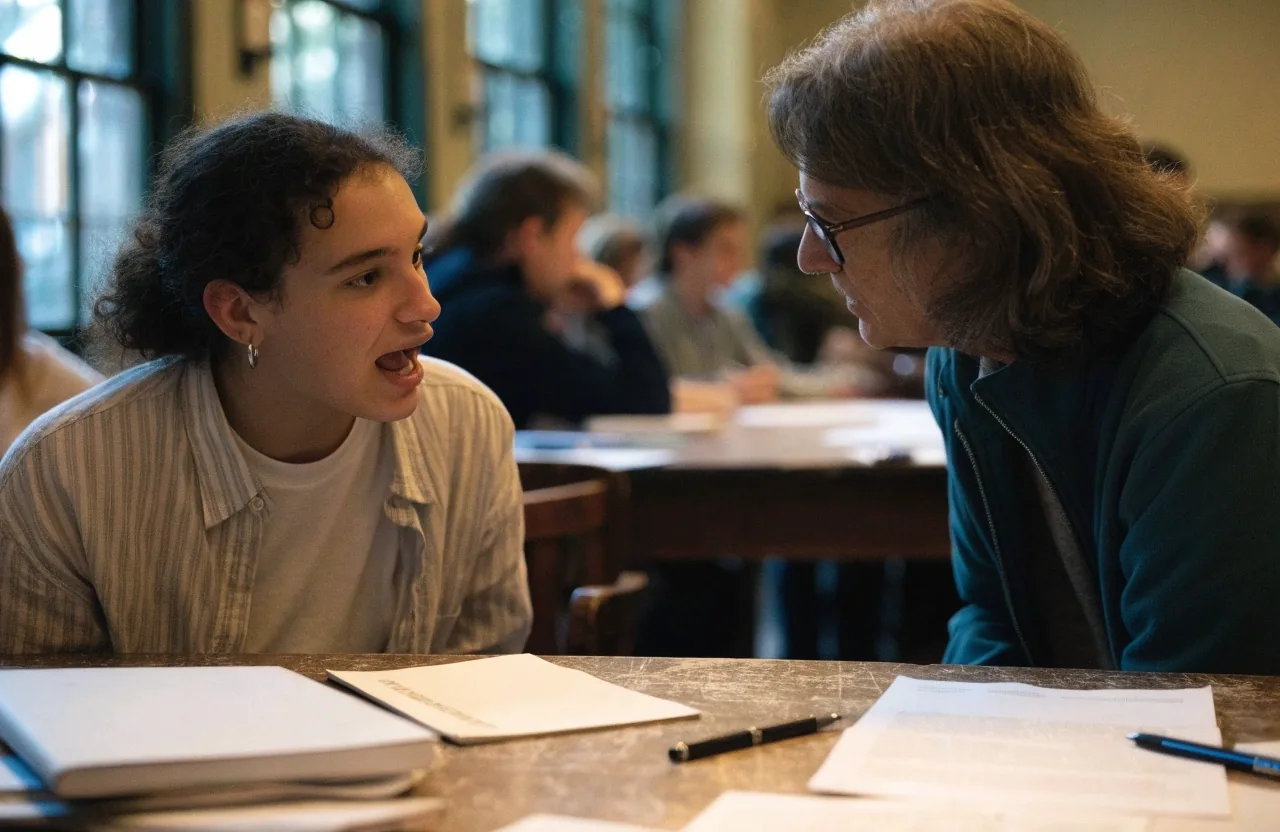
Small adult English class mid-conversation around a long table in a London classroom

Comparing study formats

Each format below is a different weekly commitment. Read the row for your real week, not the one you wish you had.

Small group classes

Small group classes

Groups capped so every learner speaks in every session, with a teacher who hears and corrects each mistake.

Twelve-week term

See the format

Book one-to-one tutoring

One-to-one tutoring

Built around your material, whether that is a job specification, a thesis chapter or a speaking test.

Full course or short block

Book a session

Intensive course

Intensive course

The same twelve-week content compressed into a shorter period, with more hours per week and less recovery time.

Compressed term

See the format

Live online class

Live online class

Same syllabus and same teachers as the London classroom, timetabled with live speaking practice rather than recordings.

Morning, evening, Saturday

Ask about online classes

If you have sat in a large class before, the first week here is where you notice the difference.

Small groups, capped by policy

One-to-one English tutorial between an adult learner and a tutor at a small table

One-to-one tutoring: when it earns its cost

Private lessons cost more per hour and are worth it in specific situations: an exam deadline, an interview, a level that sits between group classes, or a schedule that no fixed timetable fits. Sessions are built around your material, whether that is a job specification, a thesis chapter or a speaking test.

You can book one-to-one as a full course or as a short block alongside a group class.

Book one-to-one tutoring

I asked for an evening class and a plan I could keep. That is what I got.

Ray M., working parent, registered for an evening group class

Timetables: morning, evening and Saturday

Classes run in the morning, afternoon and evening, with Saturday sessions available. Terms are usually twelve weeks; intensive options compress the same content into a shorter period. We publish start dates per term and confirm your place in writing. Shift workers and parents, tell us your realistic availability before choosing.

Morning slot

Start the day in English

Morning sessions suit learners with flexible work or study hours and a clearer head before lunch. Common for A1 to B1 groups.

Evening slot

After work, with the same teacher

Evening groups are the busiest for working adults, particularly B1 and B2 learners who need range without pausing mid-sentence.

Saturday slot

One long session a week

Saturday sessions run in a longer block, useful if your week has no spare evenings. Ask about the current term's start dates.

Online and in-person

Live online classes follow the same syllabus and use the same teachers as our London classroom. They are timetabled sessions with speaking practice, not pre-recorded material. In-person classes add the room itself: body language, group dynamics, and the small social pressure that pushes some learners to speak more.

You can switch between the two between terms if your circumstances change. Ask at the point of registering so we can note it against your place.

Same syllabus
Lesson content matches across both formats, with the same exercises and speaking tasks.
Switching terms
Change format between terms — ask when you register so we can confirm the space.

Questions we get asked

If the answer you need is not here, ask us directly. We will give you a straight answer rather than a promise.

How do you actually decide my level?

A short placement conversation, roughly fifteen minutes, covering speaking, reading and listening. It is not a formal test, and it is not used as a gate. If you sit between two levels, we will say so and suggest the class where you will actually speak rather than the one that sounds grander.

Can I join mid-term?

Sometimes, when a group has space and the level matches. Most learners start at the beginning of a term because the lessons build on each other. Tell us your preferred start and we will say honestly whether a mid-term join would work for you.

Do I need a specific certificate to start?

No. We describe levels by what you can do, so the placement conversation replaces paperwork. If you do have an old certificate or a previous course result, bring it along and it can inform the discussion, but it is not required.

What should I bring to a first session?

A notebook, something to write with, and your honest level. You do not need to prepare anything. If you are coming to a one-to-one session, bring the material you are working towards, whether that is a job advert, a thesis chapter or a speaking test brief.

Are your levels aligned with UK exam boards?

Our levels follow the CEFR framework that UK universities, employers and exam boards use, so descriptions translate across systems. If you are preparing for a specific exam, see the exam preparation page for how we structure that work.

Still unsure which level or format fits?

The placement conversation settles it in about fifteen minutes. Bring your realistic weekly availability and we will suggest a level and a format that fits — even if that means holding off until the next term.

Speak to us

LocalVisa English Courses

Monday to Friday, 9:00 AM – 6:00 PM. Saturday, 10:00 AM – 2:00 PM.

Read our Privacy Policy and Terms of Service before you register.